
குறள் கூறும் அளவீடு, சமநிலை மற்றும் கணித ஒழுக்க நெறிகள்
Measurement, Balance, and Mathematical Ethics in the Tirukkural
DOI:
https://doi.org/10.63300/tm10sp022026.03Keywords:
Thirukkural, Measurement, Equilibrium, Mathematical Ethics, Moderation, RatioAbstract
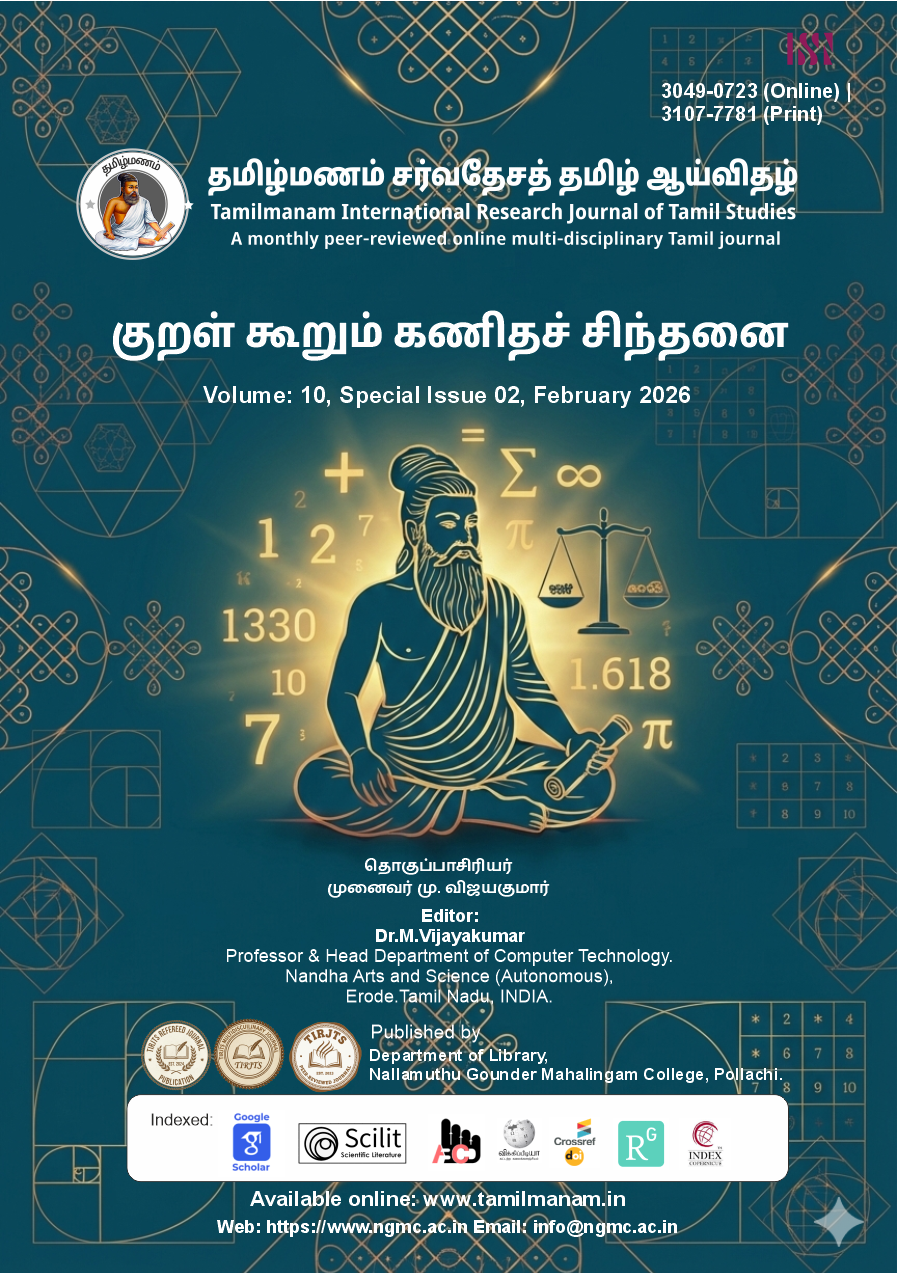
Thirukkural, the pinnacle of Tamil ethical literature, articulates the moral codes of human life in a highly condensed form. Concepts such as "Measurement" (Alavaridhal), "Moderation" (Midhathannai), "Equilibrium" (Samannilai), and "Justice" (Nyayam) are emphasized throughout the text. These are not merely moral precepts but are deeply interconnected with mathematical principles such as Measurement, Balance, Ratio, and Order. This paper examines the concepts of measurement and equilibrium in Thirukkural through the lens of "Mathematical Ethics." It highlights how measurement is indispensable in human actions and how immoderate behavior leads to ethical degradation.
In Thirukkural, "Measure" (Alavu) serves as a central theme. Valluvar insists that moderation must be observed in all aspects of life, including food, wealth, pleasure, pain, speech, and action. "Living within one's means" (Alavarindhu Vazhdhal) functions not just as a moral rule but as a mathematical equation. The verses concerning measurement in Thirukkural reflect a distinct mathematical methodology: since both excess and deficiency result in suffering, equilibrium is the fundamental basis for an ideal life.
For instance, in Inbathuppal (The Book of Love), Kural 1230 suggests that excessive passion beyond measure fails to yield true happiness. Similarly, in Porutpal (The Book of Wealth), Kural 883 explains that even enmity must be managed with calculated restraint. Thus, the mathematical principles of measurement, balance, and moderation are structured as ethical codes in Thirukkural. This study defines this integration as "Mathematical Ethics."
Downloads
References
1. செல்வராஜ், ம. (2018). திருக்குறளில் அளவீட்டுக் கோட்பாடுகள். சென்னை: பாரதி புத்தகாலயம்.
2. இராமானுஜம், அ. (2019). திருக்குறள் ஒரு தர்க்கப் பார்வை. மதுரை: மீனாட்சி புத்தக நிலையம்.
3. கணேசன், சி. (2020). "திருக்குறளில் கணித ஒழுக்கம்". தமிழ் மெய்யியல் ஆய்விதழ், 8(1), 34-49.
4. கணேசன், சி. (2019). "திருக்குறளில் எல்லைக் கோட்பாடு". தமிழ் மெய்யியல் ஆய்விதழ், 7(2), 56-71.
5. இராமானுஜம், அ. (2020). திருக்குறள் கணித விளக்கங்கள். மதுரை: மீனாட்சி புத்தக நிலையம்.
6. சுந்தரம், க. (2018). திருக்குறளில் உகமக் கோட்பாடுகள். சென்னை: சரசுவதி மகால் நூலகம்.
7. குமரவேல், க. (2020). திருக்குறள் கணித விளக்கங்கள். மதுரை: பாரதி புத்தக நிலையம்
8. செல்வராஜ், ம. (2018). திருக்குறளும் நவீன மேலாண்மையும். சென்னை: பாரதி புத்தகாலயம்.
9. சுந்தரம், க. (2020). திருக்குறள் கணிதமும் நிர்வாகமும். மதுரை: மீனாட்சி புத்தக நிலையம்.
10. சுந்தரம், க. (2018). திருக்குறள் ஒரு அறிவியல் பார்வை. மதுரை: மீனாட்சி புத்தக நிலையம்.
Downloads
Published
Issue
Section
License
Copyright (c) 2026 L.Vadivukarasi, Dr. V.C. Srinivasan (Author)

This work is licensed under a Creative Commons Attribution 4.0 International License.
Our journal adopts CC BY License Creative Commons Attribution 4.0 International License http://Creativecommons.org//license/by/4.0/ . It allows using, reusing, distributing and reproducing of the original work with proper citation.
