
இந்து தத்துவத்தில் தபோலோகம்: ஆன்மிகமும் பிரபஞ்சமும்
Tapo-loka in Hindu Philosophy: Spirituality and the Universe
DOI:
https://doi.org/10.63300/tm10sp032026.02Keywords:
Tapo-loka, Hindu Philosophy, Fourteen Lokas, Tapas, Spiritual Growth, Cosmic StructureAbstract
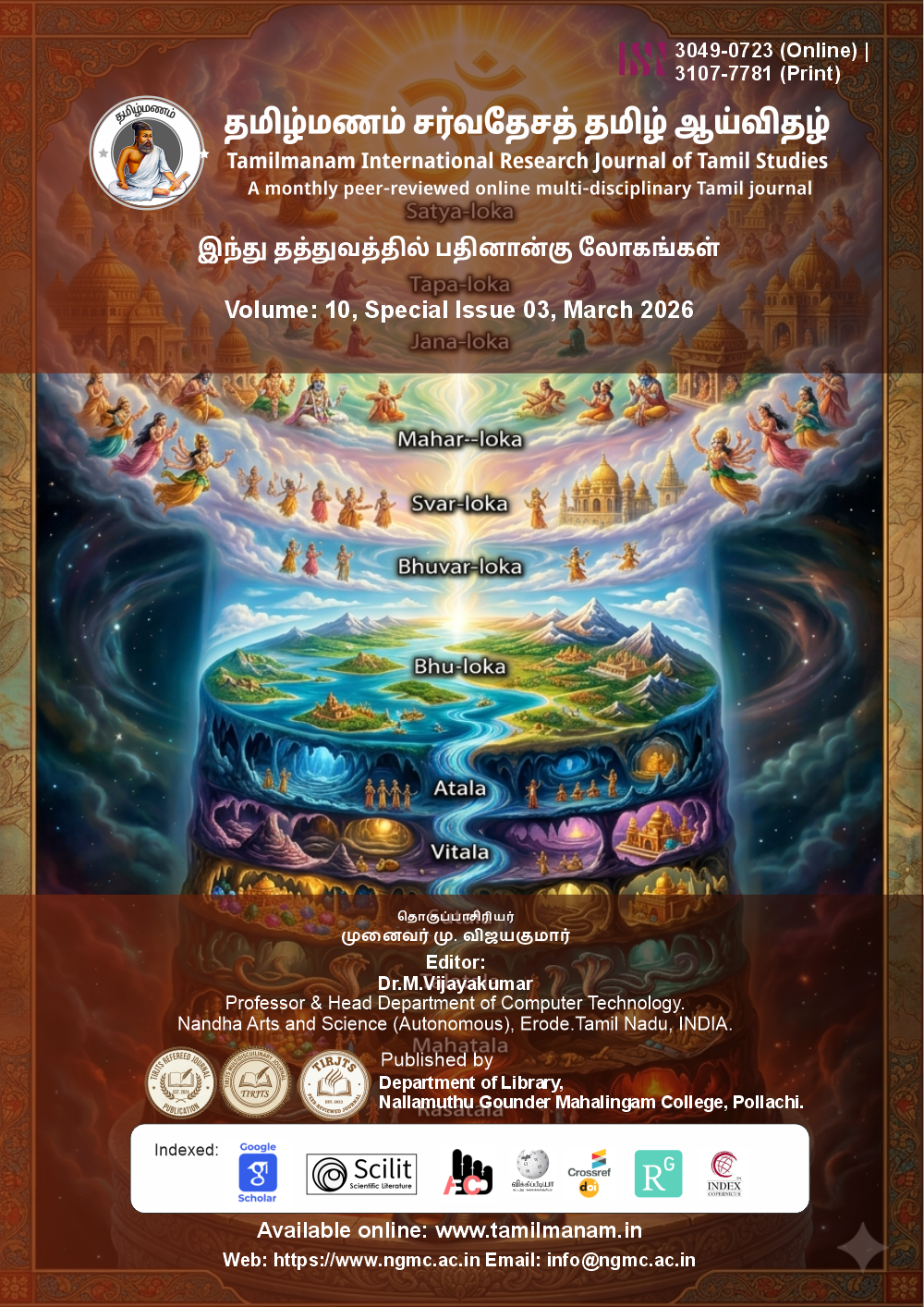
Hindu philosophy does not view the universe merely as a physical entity but explains it as a profound philosophical field that reveals the stages of spiritual evolution. The concept of the Fourteen Lokas (realms) is a magnificent astronomical-spiritual map that illustrates the progressive development of the human soul. Within this cosmic hierarchy, Tapo-loka stands as the abode of supreme penance (tapas), rigorous renunciation, and perfect wisdom.
Based on primary sources such as the Vedas, Upanishads, and Puranas, this research article deeply explores the theoretical meaning of Tapo-loka and its specific place within the structure of the universe. Furthermore, it discusses the vital role Tapo-loka plays in the path of spiritual growth and its connection to human existence. In today’s modern world, where stress and a crisis of values are on the rise, this study highlights the relevance of the spiritual balance and life guidance offered by the philosophy of Tapo-loka.
Downloads
References
[1]. வேதவியாசர். ஸ்ரீமத் பாகவதம் (ஸ்கந்தம் 2, அத்தியாயம் 5) .
[2]. சுவாமி கிருஷ்ணானந்தர். (1982). வினா-விடை அமர்வுகள் .
[3]. ஸ்ரீ அரவிந்தர் & அன்னை. (2021). ஏழு உலகங்கள் .
[4]. ஜீவ கோஸ்வாமி. பாகவத சந்தர்ப்பம் (பகுதி 61) .
[5]. சுவாமி சிவானந்தர். லோகங்கள் .
[6]. Soifer, Deborah A. (1991). The Myths of Narasimha and Vamana: Two Avatars in Cosmological Perspective. State University of New York Press .
[7]. Wisdom Library. (2024). Tapoloka: Significance and symbolism .
[8]. பிரம்ம வைவர்த்த புராணம் (பர்ஸ்வ ஏகாதசி பகுதி) .
[9]. ஸ்ரீ அரவிந்தர் & அன்னை. (2021). ஏழு உலகங்கள் .
[10]. AncientVoice. (2011). The Fourteen Worlds .
[11]. Soifer, Deborah A. (1991). The Myths of Narasimha and Vamana: Two Avatars in Cosmological Perspective. State University of New York Press. p. 51 .
[12]. ஸ்ரீமத் பாகவதம் (ஸ்கந்தம் 2, அத்தியாயம் 5).
[13]. விஷ்ணு புராணம் (பகுதி 2, அத்தியாயம் 7).
[14]. தைத்திரீய உபநிடதம் (பிரம்மானந்த வல்லி - மந்திரம் 1).
[15]. பகவத் கீதை (அத்தியாயம் 17 - சுலோகங்கள் 14-19).
[16]. வேதவியாசர். ஸ்ரீமத் பாகவதம் (ஸ்கந்தம் 3, அத்தியாயம் 12).
[17]. ஸ்ரீ அரவிந்தர். (1999). தி சின்தசிஸ் ஆப் யோகா. ஸ்ரீ அரவிந்தர் ஆசிரமம்.
[18]. சுவாமி சிவானந்தர். (2003). பகவத் கீதை விளக்கம். திவ்ய ஜீவன் பதிப்பகம்.
[19]. Swami Krishnananda. (1982). Questions and Answers on the Philosophy of the Upanishads.
Downloads
Published
Issue
Section
License
Copyright (c) 2026 Dr. G. Padmapriya, Dr. V.C. Srinivasan (Author)

This work is licensed under a Creative Commons Attribution 4.0 International License.
Our journal adopts CC BY License Creative Commons Attribution 4.0 International License http://Creativecommons.org//license/by/4.0/ . It allows using, reusing, distributing and reproducing of the original work with proper citation.
