
வைணவம்: திருமால் (மகாவிஷ்ணு) மற்றும் அவரது அவதாரங்களை வழிபடும் முறை
Vaishnavism: The Tradition of Worshipping Thirumal (Maha Vishnu) and His Avatars
DOI:
https://doi.org/10.63300/tm10sp052026.02Keywords:
Vaishnavism, Thirumal, Maha Vishnu, Avatar, Dashavatara, Alvars, Nalayira Divya Prabandham, Bhakti Movement, WorshipAbstract
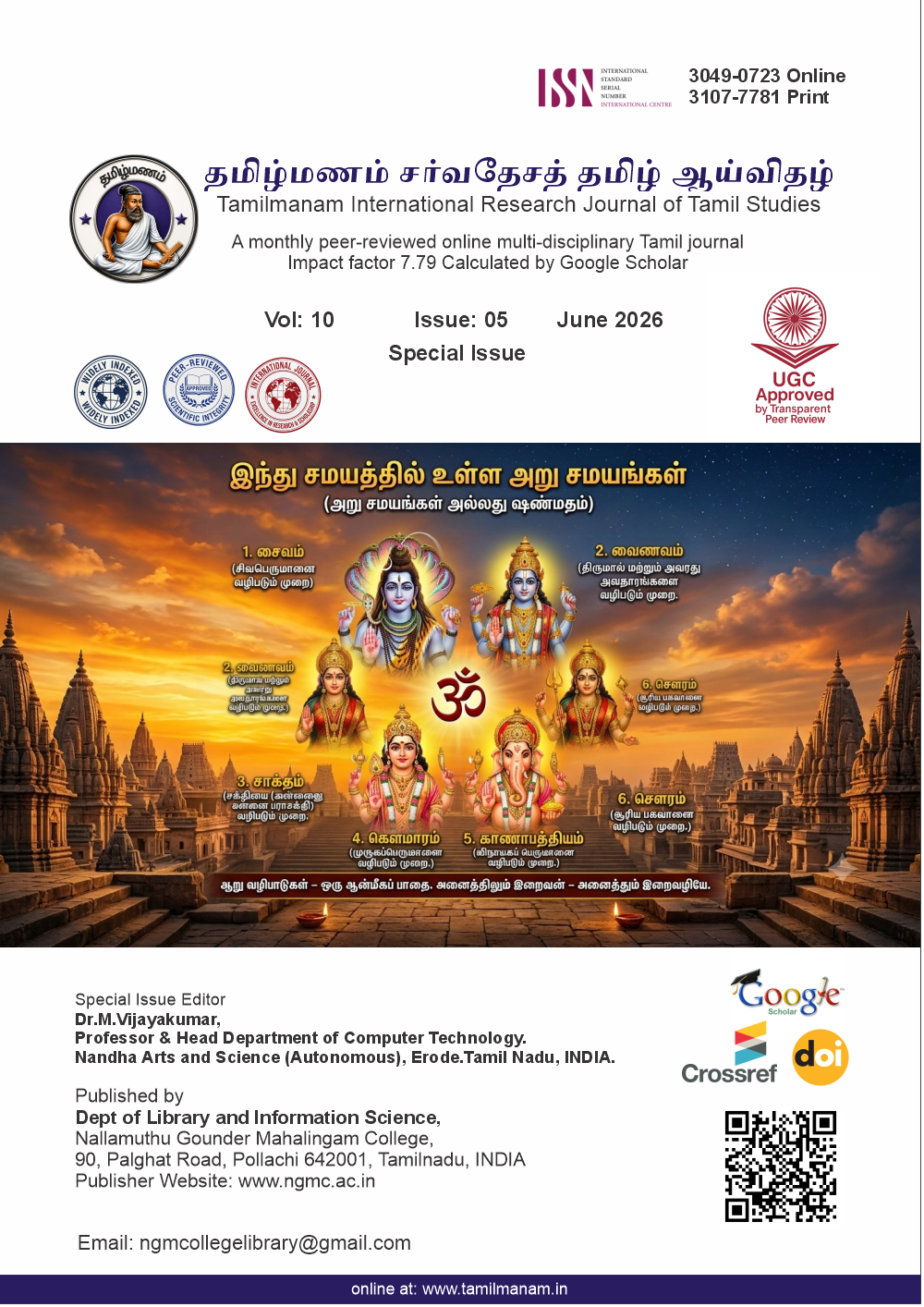
Vaishnavism stands as a prominent Bhakti (devotional) movement within Indian religious traditions. The religious path that worships Vishnu as the Supreme God is known as Vaishnavism. This faith is one of the six major sects of Hinduism. In Tamil tradition, Vishnu is affectionately called Thirumal or Perumal. The worship of Thirumal has existed in Tamil culture since the Sangam era.
Vaishnavite scriptures describe Thirumal as playing a central role in the creation, preservation, and establishment of righteousness (Dharma) in the universe. While Brahma is associated with creation and Shiva with destruction, Vishnu manifests as the Preserver. It is believed that whenever unrighteousness (Adharma) rises in the world, the Lord takes an Avatar (incarnation) to protect living beings and restore Dharma.
Among the countless incarnations of Thirumal, ten significant ones are known as the Dashavataras. These ten avatars are Matsya, Kurma, Varaha, Narasimha, Vamana, Parashurama, Rama, Balarama, Krishna, and Kalki.
The twelve Alvars, who lived in Tamil Nadu between the 5th and 9th centuries CE, were the chief pioneers of the Vaishnavite Bhakti movement. They praised Thirumal through Tamil verses and worked dedicatedly to spread Vaishnavism across Tamil Nadu. The Tamil compendium composed by these Alvars, known as the Nalayira Divya Prabandham, is revered on par with the Vedas. The Vaishnavite preceptor (Acharya) Ramanuja formalized the practice of reciting these Tamil hymns during worship rituals in all Vaishnavite temples and households.
Within Vaishnavism, there are two major sects: Vadakalai and Thenkalai, as well as two ritualistic Agama traditions: Vaikhanasa and Pancharatra. Worship rituals such as daily pujas, festivals, and the lighting of ghee lamps take place regularly in Thirumal temples. As a result of the Bhakti movement, Shaivism and Vaishnavism flourished, leading to a golden era of Tamil devotional literature. Today, Vaishnavism thrives as a faith with millions of devotees worldwide.
Downloads
References
1. சுப்பாராவ், வி. (2022). தமிழக பக்தி இலக்கிய வரலாறு: ஆழ்வார்களின் பங்களிப்பு. சென்னை: பாரதி பதிப்பகம்.
2. ராகவன், கே. (2024). சங்க இலக்கியத்தில் தெய்வ வழிபாட்டு மரபுகள். மதுரை: மீனாட்சி புத்தக நிலையம்.
3. கிருஷ்ணகுமார், எஸ். (2023). இராமானுஜரின் தத்துவங்களும் வைணவ சமூக மாற்றமும். சென்னை: கலைக்கதிர் பதிப்பகம்.
4. சதாசிவம், ஆ. (2025). ஆழ்வார்களின் பாசுரங்களில் பக்தி மார்க்கம்: ஓர் ஆய்வு. திருச்சிராப்பள்ளி: செந்தமிழ்ச் செல்வி அச்சகம்.
5. கிருஷ்ணமூர்த்தி, ஜி. (2024). வைணவத் தத்துவங்களும் இறைவனின் திருவுருவக் குறியீடுகளும். சென்னை: தமிழ் ஆன்மீக ஆய்வு மையம்.
6. சீனிவாசன், ஆர். (2023). வேதங்கள் மற்றும் புராணங்களில் மகாவிஷ்ணுவின் மேன்மை. மதுரை: பக்தி இலக்கிய வெளியீடு.
7. தியாகராஜன், மு. (2024). தசாவதாரங்களும் பரிணாமவியலும்: ஒரு வரலாற்றுப் பார்வை. சென்னை: பண்பாட்டு ஆய்வு மையம்.
8. ராமச்சந்திரன், க. (2025). புராணங்களில் தர்மம்: வைணவ அவதாரங்களின் சமூகப் பங்களிப்பு. மதுரை: ஆன்மீகத் தத்துவ வெளியீடு.
9. வாசுதேவன், கே. (2025). வைணவ வழிபாட்டு நெறிகள்: பக்தி மற்றும் சரணாகதி. சென்னை: ஸ்ரீ வைஷ்ணவ பதிப்பகம்.
10. நாராயணன், ப. (2024). தமிழகக் கோயில் வழிபாட்டு முறைகளும் திவ்யதேசங்களின் சிறப்பும். திருச்சிராப்பள்ளி: ஆன்மீக ஆய்வுச் சிந்தனை.
11. செல்வம், அ. (2025). ஆழ்வார்களின் பாசுரங்கள்: பக்தி இலக்கியத்தின் சமூகப் பரிமாணம். சென்னை: தமிழ்ப் பண்பாட்டு ஆய்வு நிறுவனம்.
12. சுப்பிரமணியன், வெ. (2024). வைணவ அறநெறிகளும் நவீன வாழ்வியலும். மதுரை: மீனாட்சி மெய்யியல் பதிப்பகம்.
Downloads
Published
Issue
Section
License

This work is licensed under a Creative Commons Attribution 4.0 International License.
Our journal adopts CC BY License Creative Commons Attribution 4.0 International License http://Creativecommons.org//license/by/4.0/ . It allows using, reusing, distributing and reproducing of the original work with proper citation.
