
திருக்குறளின் எண் குறியீடுகள் மற்றும் அவற்றின் கணிதப் பொருள் விளக்கம்
A Study on Numerical Codes and Their Mathematical Interpretations in the Tirukkural
DOI:
https://doi.org/10.63300/tm10sp022026.04Keywords:
Thirukkural, Numerical Symbols, Mathematical Structure, Chapter Distribution, Duality, Numerical PhilosophyAbstract
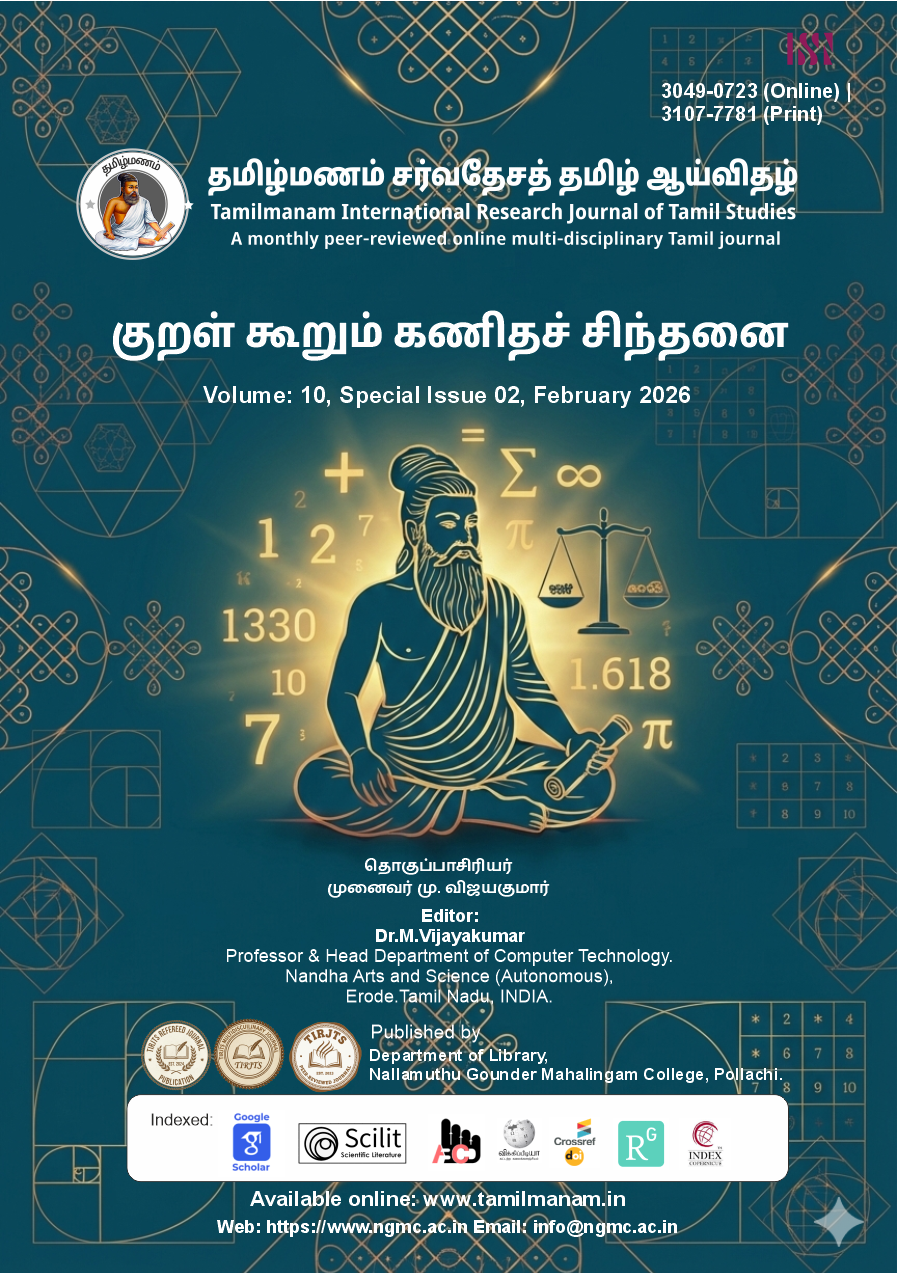
Thirukkural stands as a supreme ethical masterpiece among Tamil classical literatures. Compiling the three major spheres of life—Virtue, Politics (Wealth), and Love—into 1,330 couplets, this work is unique not only for its literary excellence but also for its structural precision, numerical order, and symbolic intelligence. This paper aims to analyze the numerical codes used in Thirukkural, their mathematical order, structural design, and the philosophical explanations rooted in numerology.
The external structure of Thirukkural is designed with a sophisticated mathematical methodology. Divided into 133 chapters, each chapter contains exactly ten couplets. This is not a coincidental arrangement but an expression of planned mathematical design. The number 133 is the product of 7 x 19. In Tamil tradition, 7 is often associated with the world/universe, and 19 is regarded as a number of completion; their combination signifies the wholeness of the text.
The distribution of chapters consists of 38 for Arathuppal (Virtue), 70 for Porutpal (Wealth), and 25 for Inbathuppal (Love). This distribution follows a 38:70:25 ratio, which serves as a measure of the importance Valluvar assigns to the three fundamental goals of human life. The 70 chapters dedicated to Porutpal highlight the primary role of material wealth in social life. Furthermore, each couplet consists of two lines; this duality reflects the dualities of life and serves as a basic unit of mathematical logic. The ten couplets in each chapter form a conceptual set that fully elucidates the chapter's theme, representing a form of combinatorial structure (Elangovan, 2020). Thus, Thirukkural is not merely literature but a symbolic numerical text functioning within a mathematical system. Numbers here do not act just as quantities but as symbols conveying deep conceptual insights.
Downloads
References
1. கோபாலகிருஷ்ணன், அ. (2017). திருக்குறள் கணிதக் கட்டமைப்பு. சென்னை: பாரதி புத்தகாலயம்.
2. செல்வராஜ், ம. (2019). "திருக்குறள் அதிகாரப் பகிர்வின் தத்துவப் பின்னணி". தமிழ் மெய்யியல் ஆய்விதழ், 8(1), 34-49.
3. சிவக்குமார், பொ. (2018). பண்டைய தமிழ் இலக்கியத்தில் அறிவியல் சிந்தனைகள். மதுரை: மீனாட்சி புத்தக நிலையம்.
4. சுந்தரம், க. (2018). திருக்குறள் அமைப்பியல் ஆய்வு. சென்னை: சரசுவதி மகால் நூலகம்.
5. தண்டபாணி, த. (2019). திருக்குறள் அளவியல் கட்டமைப்பு. மதுரை: மீனாட்சி புத்தக நிலையம்.
6. இராசேந்திரன், சு. (2020). "திருக்குறள் அதிகாரப் பகிர்வின் தத்துவப் பின்னணி". தமிழ் மெய்யியல் ஆய்விதழ், 9(1), 34-49.
7. கணேசன், சி. (2017). திருக்குறளில் எண்ணியல் தத்துவம். சென்னை: வானதி பதிப்பகம்.
8. முத்துசாமி, பெ. (2019). "திருக்குறள் முப்பால்களின் தத்துவப் பொருள்". தமிழ் மெய்யியல் ஆய்விதழ், 8(2), 56-71.
9. பாலசுப்பிரமணியன், இரா. (2018). திருக்குறள் எண்களின் மறைபொருள். திருச்சிராப்பள்ளி: பாரதிதாசன் பல்கலைக்கழகம்.
10. கணேசன், சி. (2019). "திருக்குறளில் தொகுப்பியல் தர்க்கம்". தமிழ் இலக்கிய ஆய்விதழ், 11(3), 45-62.
11. குமரவேல், க. (2020). திருக்குறள் வரிசை முறையின் தர்க்கம். மதுரை: பாரதி புத்தக நிலையம்.
12. இராமானுஜம், அ. (2018). திருக்குறள்: ஓர் அமைப்பியல் ஆய்வு. சென்னை: உலகத் தமிழாராய்ச்சி நிறுவனம்.
13. சுந்தரம், க. (2019). "திருக்குறளும் நவீன கணிதமும்". தமிழ் அறிவியல் ஆய்விதழ், 8(2), 45-61.
14. முத்துசாமி, பெ. (2020). திருக்குறள் கணிதத் தத்துவம். மதுரை: பாரதி புத்தக நிலையம்.
Downloads
Published
Issue
Section
License
Copyright (c) 2026 V.Gnaneswaran, Dr. V.C. Srinivasan (Author)

This work is licensed under a Creative Commons Attribution 4.0 International License.
Our journal adopts CC BY License Creative Commons Attribution 4.0 International License http://Creativecommons.org//license/by/4.0/ . It allows using, reusing, distributing and reproducing of the original work with proper citation.
