
அறம், பொருள், இன்பம்: திருக்குறளில் மறைந்துள்ள கணிதக் கட்டமைப்பு
Virtue, Wealth, and Love: The Hidden Mathematical Structure in Thirukkural
DOI:
https://doi.org/10.63300/tm10sp022026.05Keywords:
Thirukkural, Mathematical Structure, Numerical Order, Aram-Porul-Inbam, Duality, Logic of LifeAbstract
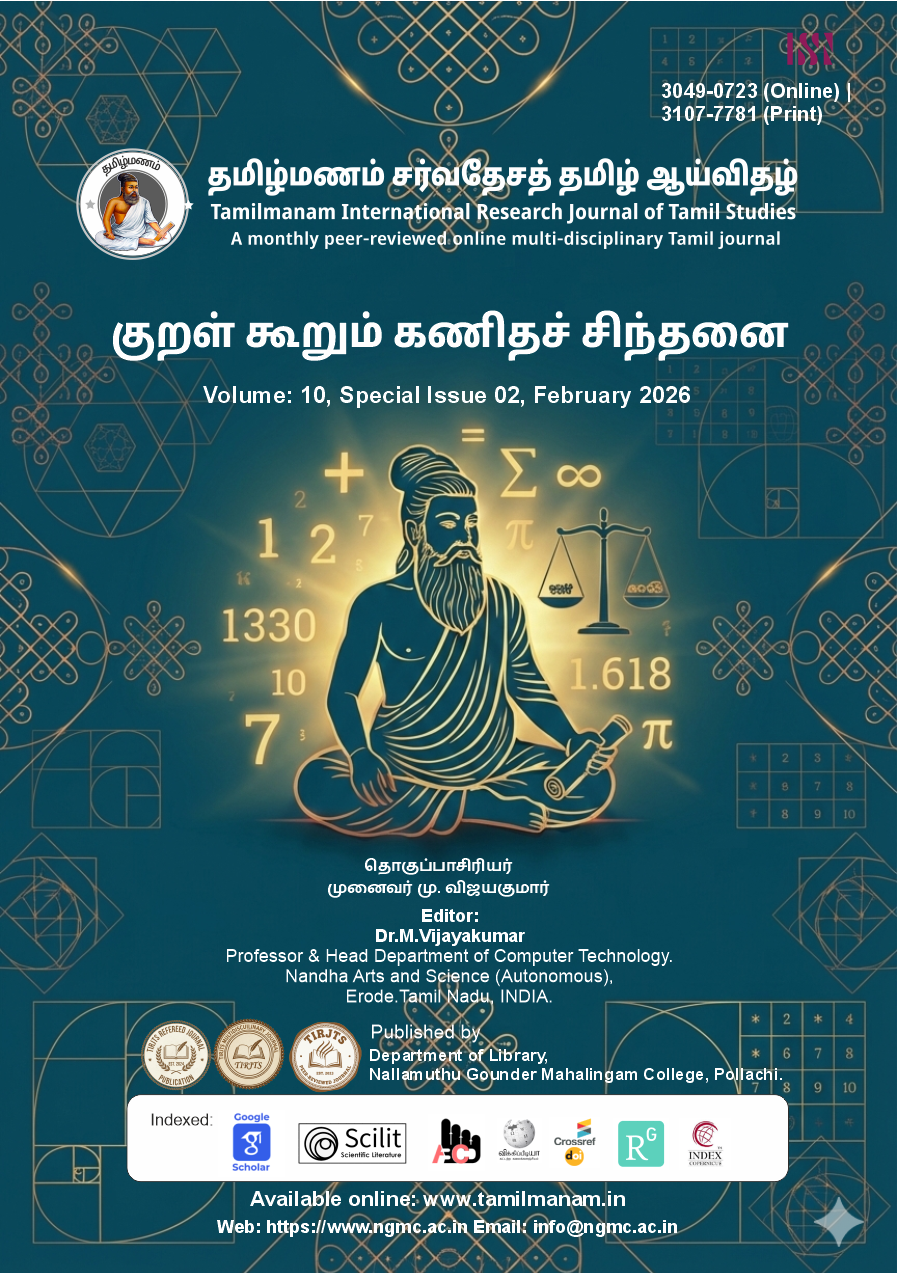
Thirukkural is a masterpiece revered as the "Universal Veda." This work is divided into three sections—Virtue (Aram), Wealth (Porul), and Love (Inbam)—comprising a total of 133 chapters and 1,330 couplets. This paper explores how this arrangement is not merely a literary order but contains a sophisticated mathematical structure. Clear mathematical logic is embedded in the numerical organization employed by Thiruvalluvar, the proportional distribution of the couplets, and the sequential order of the chapters.
Firstly, the division into three parts represents the three fundamental goals of human life while creating a complete systemic framework. Virtue contains 38 chapters, Wealth contains 70, and Love contains 25. A sense of equilibrium can be observed in this classification. The fact that every chapter contains exactly ten couplets is a prime example of numerical systematicity, providing the text with a mathematical layered quality (hierarchy).
Furthermore, each couplet consists of two lines. This duality reflects the dualities of life and establishes a logical framework. The total count of 1,330 couplets is the product of 10 and 133. The number 133 itself is divisible by 7 (7×19). Such numerical relationships are not coincidental; they are expressions of Valluvar’s profound mathematical thinking.
Thus, Thirukkural stands not only as an exceptional ethical treatise but also as a unique creation possessing a planned mathematical architecture. By designing the life components of Virtue, Wealth, and Love through numerical order and logic, Valluvar presents human life itself to us as a mathematical equation.
Downloads
References
1. கோவிந்தராஜன், க. (2015). திருக்குறள் கட்டமைப்பும் கணித முறைமையும். சென்னை: உலகத் தமிழாராய்ச்சி நிறுவனம்.
2. இராமசாமி, வே. (2018). "திருக்குறளில் அதிகார வரிசைமுறையின் தர்க்கம்". தமிழ் இலக்கிய ஆய்விதழ், 12(3), 45-58.
3. நடேசன், அ. (2016). திருக்குறள்: ஓர் அளவியல் ஆய்வு. மதுரை: பாரதி பதிப்பகம்.
4. சண்முகம், இரா. (2019). "திருக்குறள் பால்களின் எண்ணியல் பகிர்வும் வாழ்வியல் தத்துவமும்". தமிழ் மெய்யியல் ஆய்விதழ், 7(2), 89-104.
5. பாலகிருஷ்ணன், கோ. (2017). "திருக்குறளின் தர்க்க அமைப்பு: ஒரு மொழியியல் பகுப்பாய்வு". மொழியும் சிந்தனையும், 4(1), 23-37.
6. சீனிவாசன், த. (2017). இலக்கிய ஆய்வில் புள்ளியியல் பயன்பாடுகள். சென்னை: நியூ செஞ்சுரி புக் ஹவுஸ்.
7. ராமானுஜம், அ. (2019). "திருக்குறள் ஆய்வு முறைகள்: ஓர் மீளாய்வு". தமிழ்க் கலை இலக்கிய ஆய்விதழ், 8(3), 67-82.
8. வேங்கடசாமி, ம. (2016). ஆய்வு முறையியல்: தமிழில் ஒரு வழிகாட்டி. கோயம்புத்தூர்: பாரதி பதிப்பகம்.
9. முத்துசாமி, பெ. (2018). திருக்குறள் எண்ணியல் குறியீடுகள். சென்னை: தமிழ் மரபு அறக்கட்டளை.
10. இராசேந்திரன், சு. (2020). "திருக்குறள் அதிகாரப் பகிர்வின் தத்துவப் பின்னணி". தமிழ் மெய்யியல் ஆய்விதழ், 9(1), 34-49.
11. தண்டபாணி, த. (2019). திருக்குறள் அளவியல் கட்டமைப்பு. மதுரை: மீனாட்சி புத்தக நிலையம்.
12. கணேசன், சி. (2017). திருக்குறளில் தர்க்க முறை. சென்னை: வானதி பதிப்பகம்.
13. சுப்பிரமணியன், க. (2019). "அறத்துப்பாலில் கணிதக் கோட்பாடுகள்". தமிழ் இலக்கிய ஆய்விதழ், 11(2), 73-88.
14. சிவக்குமார், அ. (2018). திருக்குறளில் நிர்வாகவியல் சிந்தனைகள். சென்னை: ராஜ் பதிப்பகம்.
15. இராமசுப்பிரமணியன், வே. (2019). "பொருட்பால்: ஒரு சமூகவியல் பகுப்பாய்வு". தமிழ் அறிவியல் ஆய்விதழ், 8(4), 112-128.
16. சண்முகசுந்தரம், க. (2017). திருக்குறள் மெய்யியலும் நிர்வாகவியலும். மதுரை: பாரதி புத்தக நிலையம்.
17. நடராசன், த. (2020). "பொருட்பாலில் பொருளாதாரக் கணித முறைமைகள்". தமிழ் ஆய்வு மலர், 15(2), 67-82.
18. செல்வராஜ், ம. (2018). திருக்குறளில் உளவியல் சிந்தனைகள். சென்னை: பாரதி புத்தகாலயம்.
19. இளங்கோவன், க. (2019). "இன்பத்துப்பால்: ஓர் உளவியல் பகுப்பாய்வு". தமிழ் மரபு ஆய்விதழ், 7(3), 89-104.
20. முத்தையா, பொ. (2017). திருக்குறள் மெய்யியலும் வாழ்வியலும். மதுரை: மீனாட்சி புத்தக நிலையம்.
21. சிவானந்தம், வே. (2020). "இன்பத்துப்பாலில் சமநிலைக் கோட்பாடுகள்". தமிழ் இலக்கிய ஆய்விதழ், 12(1), 45-60.
Downloads
Published
Issue
Section
License
Copyright (c) 2026 S. Thilakavathi, Dr. V.C. Srinivasan (Author)

This work is licensed under a Creative Commons Attribution 4.0 International License.
Our journal adopts CC BY License Creative Commons Attribution 4.0 International License http://Creativecommons.org//license/by/4.0/ . It allows using, reusing, distributing and reproducing of the original work with proper citation.
