
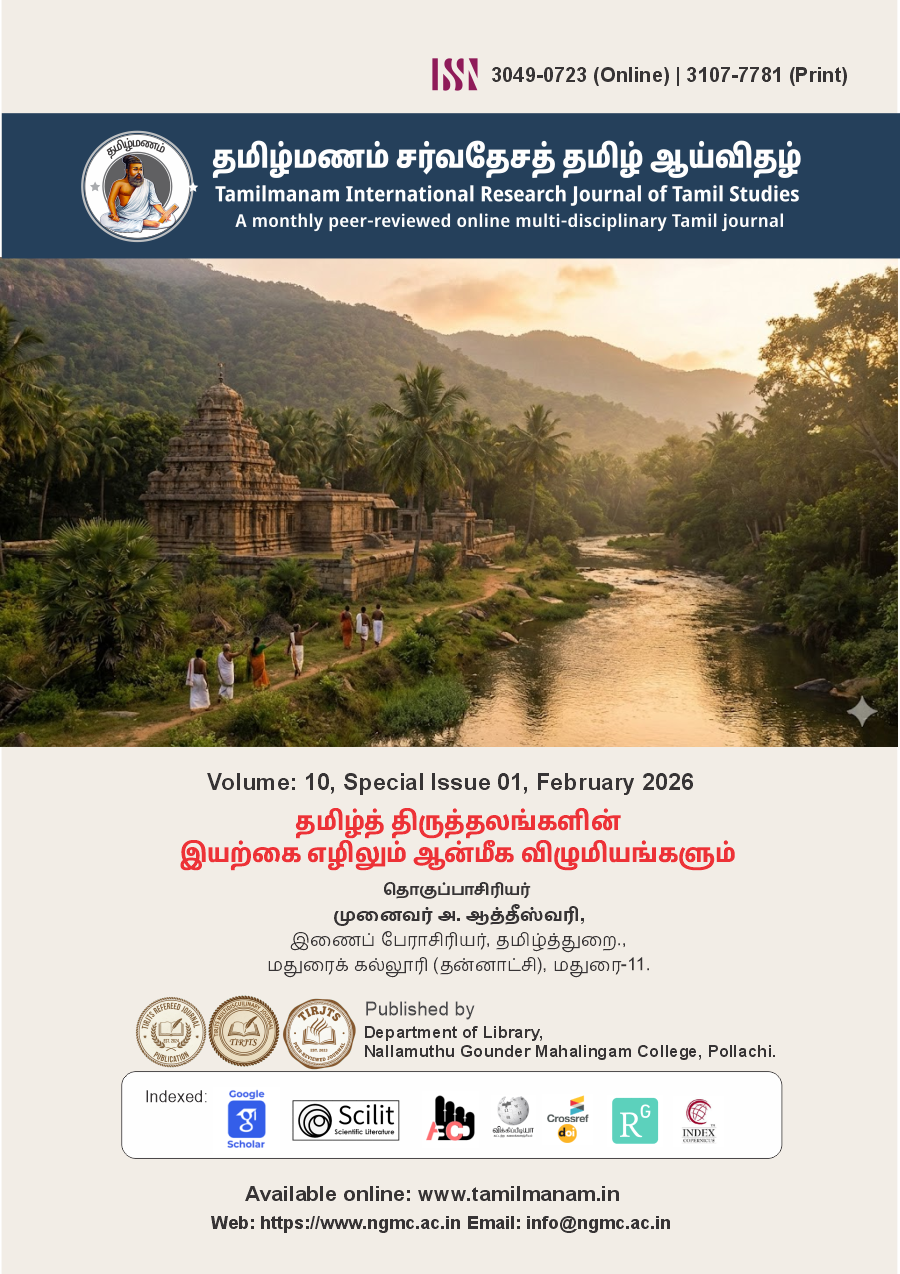
தேவாரத் திருத்தலங்களில் இயற்கை எழில் காட்சிகள்
Natural Scenic Beauty in Tevaram Holy Shrines
DOI:
https://doi.org/10.63300/tm01sp0126.03Keywords:
Tevaram, Nature Description, Saiva Siddhanta, Five Tinai Traditions, Bhakti MovementAbstract
In the history of Tamil literature, the Bhakti movement was not merely a religious propagation, but also stood as a great artistic and literary renaissance. The Tevaram hymns, which originated between the 7th and 9th centuries CE, presented the natural beauty of the Tamil landscape intertwined with divinity. This research paper meticulously examines the nature descriptions found in the hymns of the "Tevaram Trio"—Thirugnanasambandar, Thirunavukkarasar, and Sundaramurthy Swamigal. Specifically, hymns that illustrate the manner in which non-human beings (inanimate/animals) like elephants, monkeys, and birds worship the Lord are analyzed within the background of Saiva Siddhanta.
This article elaborates on how the Tinai traditions (land-based poetic conventions) of Sangam literature underwent a spiritual transformation in Bhakti literature, and how nature has preserved the landscape of that era as a 'Time Capsule'. Furthermore, the importance of these hymns from a modern ecological perspective and the necessity of preserving the natural resources of the holy shrines are presented as research conclusions.
தமிழ் இலக்கிய வரலாற்றில் பக்தி இயக்கம் என்பது வெறும் சமயப் பரப்புரையாக மட்டும் அமையாமல், ஒரு பெரும் கலை மற்றும் இலக்கிய மறுமலர்ச்சியாகவும் திகழ்ந்தது. கி.பி. ஏழாம் நூற்றாண்டு முதல் ஒன்பதாம் நூற்றாண்டு வரையிலான காலப்பகுதியில் தோன்றிய தேவாரப் பாடல்கள், தமிழ் நிலப்பரப்பின் இயற்கை எழிலைத் தெய்விகத் தன்மையோடு இணைத்து வழங்கின. இவ்வாய்வுக் கட்டுரை, தேவார மூவர் எனப்படும் திருஞானசம்பந்தர், திருநாவுக்கரசர் மற்றும் சுந்தரமூர்த்தி சுவாமிகள் ஆகியோரின் பாடல்களில் பயின்று வரும் இயற்கை வருணனைகளை நுணுக்கமாக ஆராய்கிறது. குறிப்பாக, அஃறிணை உயிரினங்களான யானைகள், குரங்குகள், பறவைகள் போன்றவை இறைவனை வழிபடும் பாங்கினை விளக்கும் பாடல்கள், சைவ சித்தாந்தப் பின்னணியில் பகுப்பாய்வு செய்யப்படுகின்றன. சங்க இலக்கியத் திணை மரபுகள் எவ்வாறு பக்தி இலக்கியத்தில் ஆன்மீக உருமாற்றம் பெற்றன என்பதையும், இயற்கை ஒரு 'காலப் பேழை'யாக (Time Capsule) அக்கால நிலவியலைப் பாதுகாத்து வைத்துள்ள விதத்தையும் இக்கட்டுரை விரிவாக விளக்குகிறது. மேலும், நவீனச் சூழலியல் நோக்கில் இப்பாடல்களின் முக்கியத்துவமும், திருத்தலங்களின் இயற்கை வளத்தைப் பாதுகாப்பதன் அவசியமும் ஆய்வு முடிவுகளாக முன்வைக்கப்படுகின்றன.
Downloads
References
1. அத்தீஸ்வரி, அ. மற்றும் பாலமுருகன். "தலங்களின் எழில் காட்சிகள்." தமிழ்மணம் சர்வதேசத் தமிழ் ஆய்விதழ், மதுரை கல்லூரி, 2023..
2. குணபாலசிங்கம், வே. மற்றும் சுரேஷ், ரா. "தேவாரக் காலத்தில் தமிழ்நாட்டில் நிலவிய சமய மரபுகள்." இந்தியத் தமிழ் ஆய்விதழ், தொகுதி 5, எண் 1, 2024, பக். 1-11..
3. கிருஷ்ணமூர்த்தி, வித்யா. "தேவாரத்தில் இயற்கை எழில் காட்சிகள்: ஓர் ஆய்வு." வித்யா கிருஷ்ணமூர்த்தி வலைப்பதிவு, 2016..
4. சம்பந்தர், திருஞான. முதலாம் திருமுறை. சைவ சித்தாந்தப் பெருமன்றம், 2015..
5. "தேவாரத்தில் புறப்பொருளின் செல்வாக்கு." ResearchGate, 2020..
6. "திருநாவுக்கரசர் தேவாரத்தில் இயற்கை: ஒரு அழகியல் பார்வை." MJS Online Journal, 2022..
7. "தேவாரத்தில் பல்லுயிர்ப் பெருக்கச் சிந்தனைகள்." பிரணவ் ஆய்விதழ், 2021..
8. "சங்க இலக்கியத்தில் இயற்கை வழிபாடு." International Research Journal of Tamil, 2022..
9. இராமனுஜன், ஏ. கே. தேவாரப் பாடல்களில் இயற்கை மற்றும் பக்தி. ஆக்ஸ்போர்டு பல்கலைக்கழகப் பதிப்பகம், 1999..
10. "சைவ சித்தாந்தத்தின் அடிப்படைத் தத்துவங்கள்." Britannica Encyclopedia, 2024..
Downloads
Published
Issue
Section
License
Copyright (c) 2026 Dr. A. Atheeswari (Author)

This work is licensed under a Creative Commons Attribution 4.0 International License.
Our journal adopts CC BY License Creative Commons Attribution 4.0 International License http://Creativecommons.org//license/by/4.0/ . It allows using, reusing, distributing and reproducing of the original work with proper citation.
