Abstract
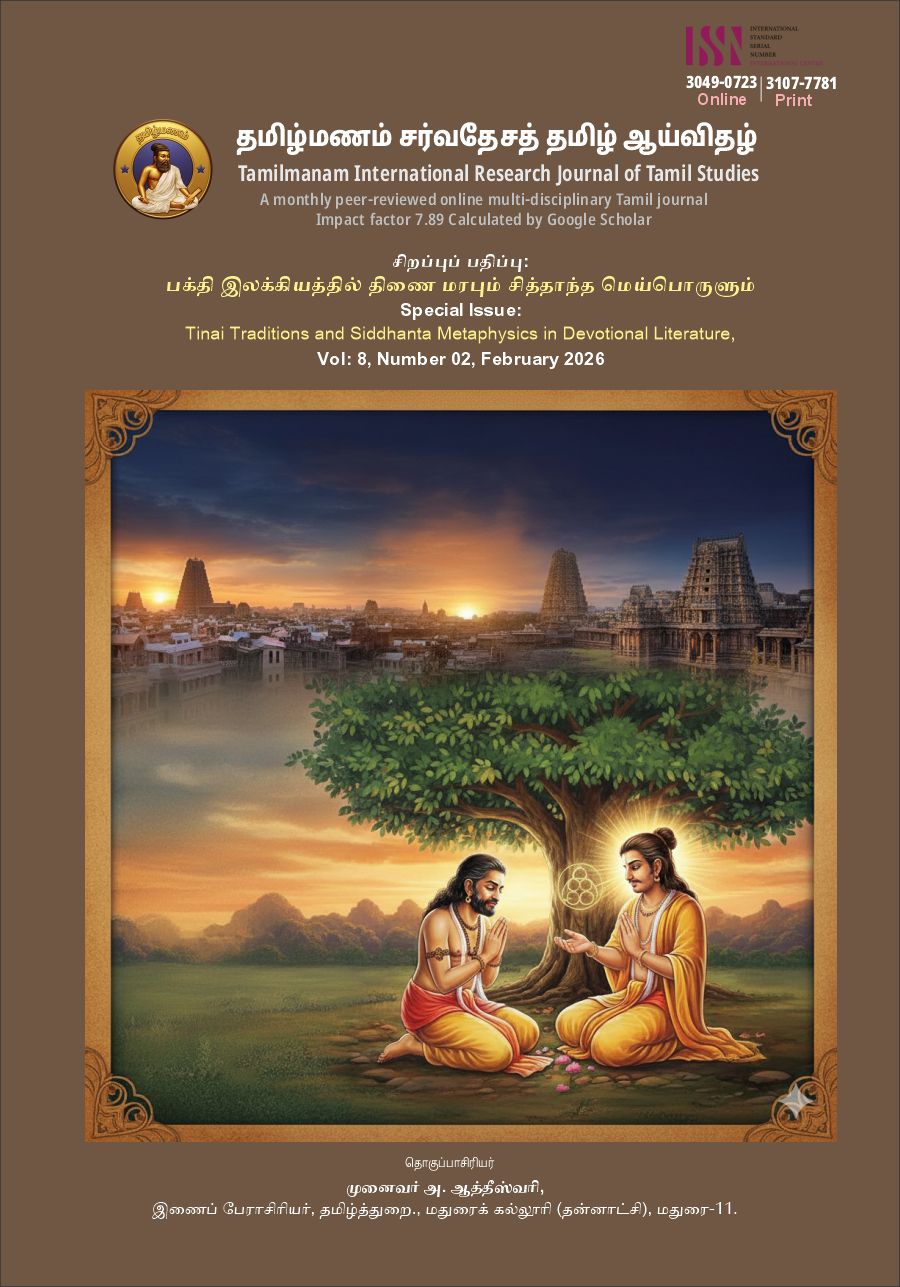
Saiva Siddhanta is a holistic metaphysical system emerging from the profound philosophical inquiries of Tamil culture. Grounded in the triadic reality of Pati (God), Pasu (Soul), and Pasam (Bondage), this philosophy explains how souls liberate themselves from worldly fetters through Divine Grace to attain supreme bliss.
This article explores how Divine Grace (Arul) is not merely compassion, but a transcendental power that dispels the darkness of ignorance and generates the flow of Sivananda (divine bliss). Drawing upon literary evidences from Manikkavasagar’s Thiruvasagam, Thirumular’s Thirumandiram, and Umapathi Shivachariyar’s Thiruvarutpayan, this study analyzes how ‘Bestowal of Grace’ (Arulal)—among the five divine acts of Lord Shiva—stands as the pinnacle of spiritual evolution.
Furthermore, this paper presents detailed explanations and tables regarding the stages of spiritual maturity, including Mala Paripakam (ripening of impurities), Iruvinaiyoppu (equanimity towards karma), and Saktinipatam (the descent of grace), alongside the fourfold path beginning with Cariya. This research proves that Divine Grace serves as both the foundation for the soul and the axis upon which the universe functions.
Views & downloads
- Article views
- Full-text downloads
References
6 references- 1. அருள்நந்தி சிவாசாரியார். சிவஞான சித்தியார். சென்னை: சைவ சித்தாந்த நூற்பதிப்புக் கழகம், 1968. அச்சு..
- 2. குமரகுருபரன் பிள்ளை, டி.எம்., பதிப்பாசிரியர். திருமூல நாயனார் அருளிய திருமந்திரம் - பத்தாம் திருமுறை. வைகுண்டம்: ஸ்ரீ குமரகுருபரன் சங்கம், 1968. அச்சு..
- 3. சுப்பிரமணிய பிள்ளை, கா. திருவாசகம்: திருத்தெள்ளேணம் மற்றும் இதர பதிகங்கள். சென்னை: திருநெல்வேலி தென்னிந்திய சைவ சித்தாந்த நூற்பதிப்புக் கழகம், 1958. அச்சு..
- 4. மணி, சி.சு. திருவருட்பயன் மூலமும் உரையும். சென்னை: வித்யாரத்னாகர அச்சகம், 2005. அச்சு..
- 5. Pechilis Prentiss, Karen. The Embodiment of Bhakti. Oxford: Oxford University Press, 1999. Print..
- 6. Tauber, David. Saiva Siddhanta: Social History & Scripture. Montreal: McGill University, 2013. Print..
How to Cite