Abstract
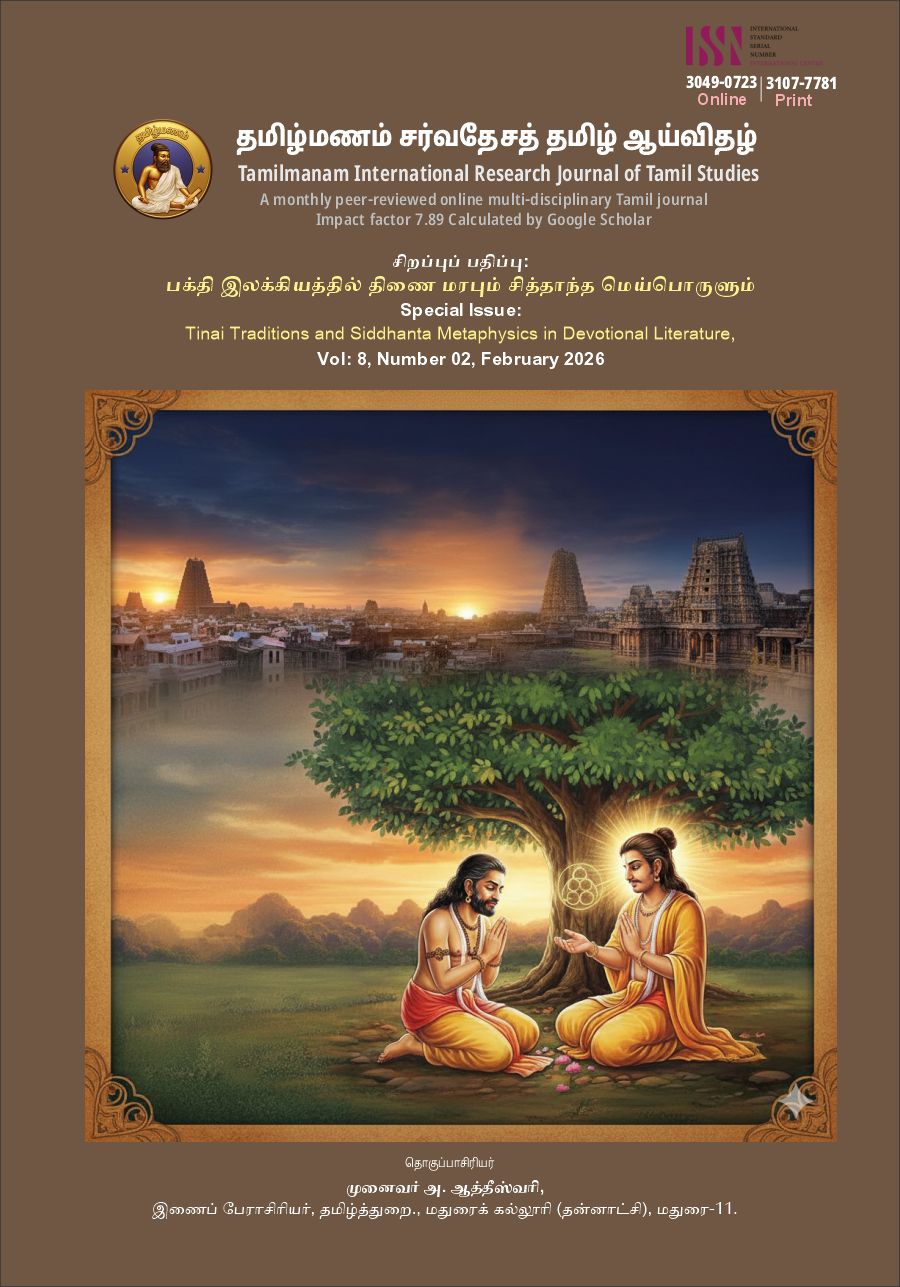
The evolution of Tamil literature from the Sangam period to the Bhakti era marks a significant journey of transition from praising mortals to praising the Divine. At the heart of this transition lies Paadaan Thinai. Traditionally, this Purapporul convention focused on the fame, strength, philanthropy, and grace of a hero (king or patron) in Sangam poetry. However, in the Moovar Thevaram—the Saiva scriptures emerging during the 7th and 8th centuries CE—this tradition was adapted to center upon Lord Shiva as the Supreme Being, creating a new dimension in devotional literature.
This study explores how the sub-themes (Thurais) of Paadaan Thinai, as defined in Tolkappiyam and Purapporul Venba Maalai, were absorbed into the hymns of Thirugnanasambandar, Thirunavukkarasar, and Sundaramurthi Nayanar. Specifically, this research provides a detailed analysis of how elements such as Kadavul Vazhthu (Invocation), Poovai Nilai (Comparing the deity to the Kaya flower), Iyanmozhi Vazhthu (Praising inherent virtues), Parisil Thurai (Seeking a gift/grace), and Kadavul Maattu Maanida Pendir Nayanda Pakkam (Human women pining for the Divine) profoundly influenced the Thevaram verses. Ultimately, this thesis establishes that Bhakti literature serves as an extension of Sangam Purapporul elements and demonstrates how it functioned as a catalyst for social and spiritual transformation.
Views & downloads
- Article views
- Full-text downloads
References
7 references- 1. ஐயனாரிதனார். புறப்பொருள் வெண்பாமாலை. பொ. ஊ. 9-ஆம் நூற்றாண்டு, பதிப்புத் துறை.
- 2. சம்பந்தர், திருநாவுக்கரசர், மற்றும் சுந்தரமூர்த்தி நாயனார். மூவர் தேவாரம். சைவத் திருமுறைகள் (1-7), சைவ சித்தாந்த மகா சமாஜம்.
- 3. சிறீனிவாசன், ராகவன். "The Language of Bhakti: Rebellion in Verse." Ilankai Tamil Sangam, 12 ஜன. 2026, sangam.org/the-language-of-bhakti/.
- 4. தொல்காப்பியர். தொல்காப்பியம்: பொருளதிகாரம். இளம்பூரணர் உரை, சாரதா பதிப்பகம்.
- 5. பாலசுப்ரமணியம், கே. வி. செம்மொழி ஏன்? எதற்கு?. மணிவாசகர் பதிப்பகம், 2012.
- 6. பாமயன். திணையியல் கோட்பாடுகள். தடாகம் வெளியீடு, 2012.
- 7. வரதராசன், மு. பழந்தமிழ் இலக்கியத்தில் இயற்கை. பாரி நிலையம், 1964.
How to Cite